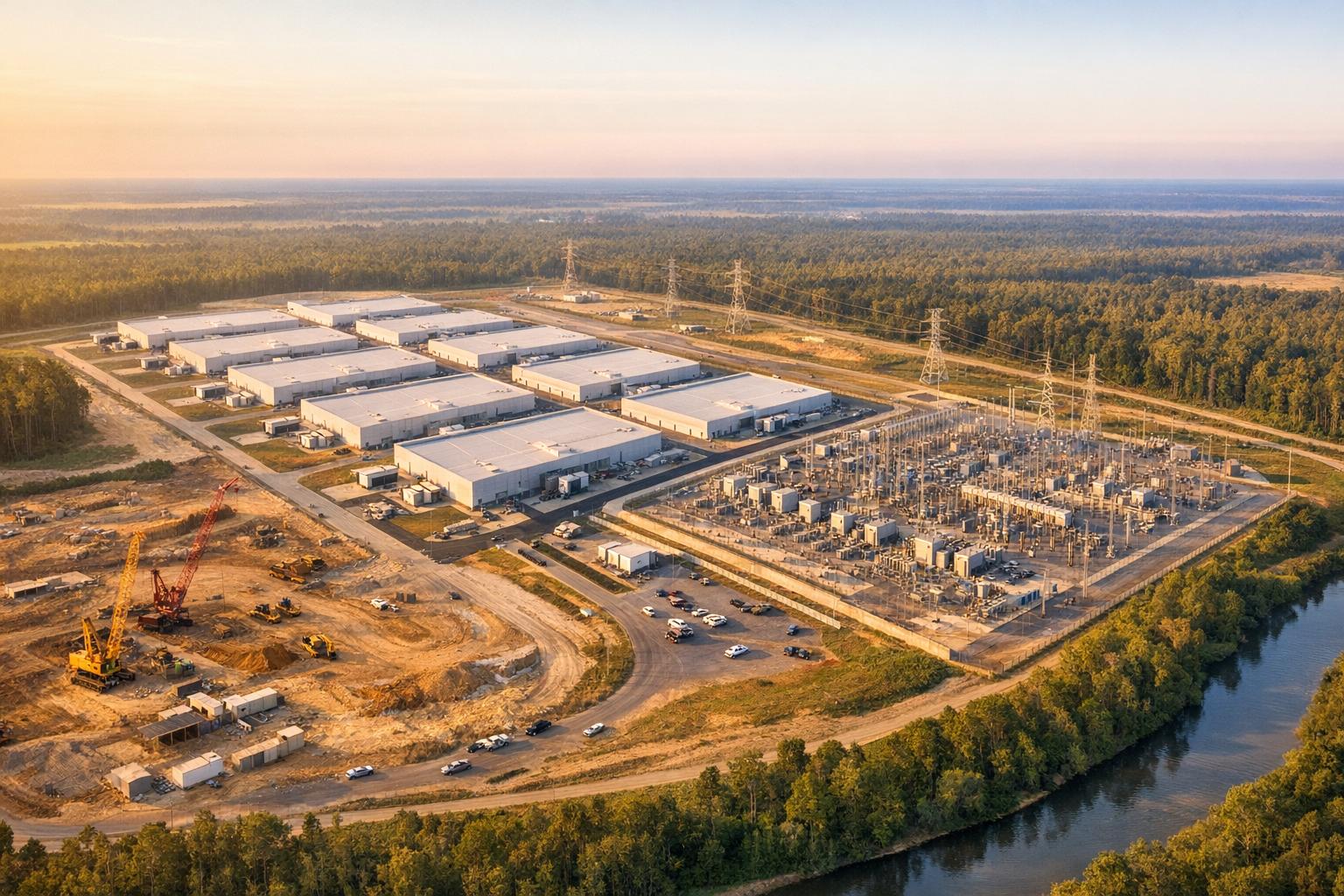
The U.S. construction industry needs over 500,000 skilled workers annually through 2026. This shortage impacts critical sectors like data centers, energy, and large-scale projects, where technical expertise is crucial. Recruitment agencies specializing in construction are solving this challenge by connecting companies with pre-vetted candidates who meet precise technical and certification requirements.
Recruitment agencies are essential for keeping construction projects on schedule and ensuring they meet technical demands. They handle the complexities of hiring so companies can focus on delivering their projects.

Construction Industry Labor Shortage Statistics and Recruitment Agency Benefits
Partnering with specialists helps firms overcome common staffing challenges on large-scale construction projects that often lead to costly delays.
In high-stakes construction projects, time is money. Recruitment agencies specializing in construction play a critical role in keeping things on track. Imagine a $50 million industrial facility needing a commissioning engineer with expertise in liquid cooling systems. Every day that position remains unfilled delays progress and increases costs. Recruitment agencies help avoid these setbacks by maintaining networks of pre-qualified professionals who can step into roles immediately.
A 2025 survey revealed that 92% of construction firms face challenges in finding qualified workers. The industry is projected to require an additional 501,000 workers in 2025 to meet growing demand. And these aren't just general laborers - companies are hunting for specialized professionals like MEP coordinators, project schedulers, and cost estimators. Recruitment agencies bridge this gap by thoroughly screening candidates for certifications, verifying their experience, and ensuring they fit the role’s requirements before presenting them to employers.
Labor shortages in construction aren't just about a lack of hands - they're about a lack of specialized skills. For example, 83% of firms report difficulty finding qualified mechanics and cement masons, 80% struggle to hire plumbers, and 72% face shortages of carpenters. These roles require specific expertise, making them harder to fill.
Recruitment agencies tackle this issue by maintaining databases of passive candidates - professionals who may not be actively job hunting but are open to the right opportunity. Before introducing candidates, agencies confirm they hold essential credentials such as OSHA certifications, state licenses, and other technical qualifications. This rigorous pre-qualification ensures that every candidate presented is ready to meet the job's demands.
Speed matters in construction hiring, but speed without accuracy can create more problems than it solves. Recruitment agencies excel at striking the right balance. While temporary roles can often be filled within six days, more senior positions like management or executive roles typically take between 21 and 45 days. Specialized agencies streamline this process by conducting structured phone interviews, technical assessments, and thorough reference checks, ensuring only qualified candidates reach the hiring manager’s desk.
Many agencies also offer a 30-90 day replacement guarantee for permanent hires. If a new hire doesn’t work out, they’ll provide a replacement at no extra cost. This safety net reduces risk for construction firms and motivates agencies to focus on quality placements rather than rushing to fill roles.
Recruitment agencies do more than just fill vacancies - they help ensure projects succeed by matching the right professionals to the right roles. For instance, a project manager with experience with hyperscale data center hiring challenges can coordinate complex builds more efficiently, avoiding delays and costly mistakes.
The precision of this matching process is key. Agencies understand the nuanced differences between, say, a mechanical engineer who’s worked on HVAC systems for office buildings and one who’s designed cooling systems for semiconductor facilities. By placing professionals with the exact expertise required, agencies minimize learning curves and set projects up for smooth execution from day one.
Construction recruitment agencies don’t just sit back and wait for resumes to roll in. Instead, they actively seek out skilled professionals, even those who aren’t actively job hunting. This proactive strategy is crucial, especially as the construction industry is expected to require 439,000 new workers by 2025. Paired with creative pricing models, these agencies aim to align their success with the needs of their clients.
Specialized recruitment agencies typically operate on a success-based pricing model, meaning they only charge fees once a candidate is successfully hired. This approach minimizes financial risk for employers. Fees generally range from 15% to 25% of the candidate’s first-year salary. For example:
This structure ensures that agencies are motivated to deliver qualified candidates promptly, as they’re paid only when a hire is made. For executive or highly specialized roles, a retained model with progress payments is often used. These roles carry high stakes - unfilled leadership positions can cost companies tens of thousands of dollars daily in lost margins and project delays.
The best construction professionals aren’t usually browsing job boards - they’re already excelling in their current roles. Recruitment agencies tackle this challenge by targeting these high performers who might be open to the right opportunity. Agencies rely on detailed market intelligence, including talent mapping and compensation data, to identify professionals who are delivering top results on comparable projects.
One example of this targeted approach involved an agency securing over 40 hires during a long-term engagement, achieving 30% cost savings and maintaining an average placement cost of 20% of each hire’s salary. For mission-critical roles, recruiters often conduct discreet outreach, bypassing public job postings entirely. They craft personalized narratives that align a company’s vision with the candidate’s career goals, sparking interest. In many cases, agencies aim to secure an offer acceptance within 30 days of starting their search.
Understanding the nuances of regional construction markets gives agencies a major edge. This local expertise is vital for navigating technical and regulatory demands on complex projects. Agencies analyze factors like building codes, workforce trends, prevailing wages, and real-time compensation data for specific regions. This allows them to pinpoint candidates with the right experience to handle local challenges.
For high-stakes sectors such as data center construction or energy infrastructure, agencies prioritize technical skills like MEP coordination, critical systems commissioning, and high-voltage electrical work. These specialized skills are essential for hyperscale facilities and power projects. Agencies like iRecruit.co, which focus on these sectors, boast a 90% client retention rate by consistently delivering candidates who meet these unique demands.
iRecruit.co brings a specialized approach to recruiting for mission-critical construction projects, where every hire plays a crucial role. When working on high-stakes projects like data centers, energy facilities, or advanced manufacturing plants, the margin for error is razor-thin. Generic hiring strategies simply don’t cut it. That’s why iRecruit.co focuses on placing technical leaders with expertise in areas like MEP coordination, critical systems commissioning, and energy infrastructure management.
iRecruit.co handles recruitment for executive and project leadership roles in sectors such as data centers, energy, and advanced manufacturing. Their placements include positions like MEP Managers, Commissioning Engineers, Critical Systems Superintendents, Project Managers, and Construction Vice Presidents. With over 200 projects completed for more than 70 clients, iRecruit.co consistently delivers candidates who can navigate the technical demands of mission-critical construction.
"We place proven construction leaders for complex projects."
Their success is evident in real-world examples. Noah Clarke, a Data Center Project Manager placed by iRecruit.co, managed a 100MW data center expansion on schedule while overseeing $400M in concurrent builds, all while maintaining 98% uptime. Another standout, Charlotte Morgan, a Data Center Construction SME, played a key role in a $500M Tier IV data center rollout across three continents. Her early design-phase input reduced commissioning issues by 40%.
The recruitment process at iRecruit.co starts with a discovery call, where an Account Manager works with the client to define the ideal candidate profile and job requirements. From there, technical phone screenings ensure that candidates meet the necessary qualifications, are interested in the role, and align with compensation expectations. By the time hiring managers conduct interviews, they’re only meeting pre-qualified candidates.
The agency operates on a 21-day sprint to source candidates and schedule client interviews, aiming to secure an offer acceptance within 30 days. For specialized roles like MEP Managers, candidates are rigorously vetted for their knowledge of essential codes, safety standards, and mission-critical software.
To mitigate risk, iRecruit.co offers a 90-day search credit. If a new hire doesn’t work out within the first 90 days, the agency provides a replacement at no extra cost. This guarantee, combined with a 90% client retention rate, highlights their ability to match the right candidates to the right roles.
Their success-based pricing model is designed for flexibility. Companies hiring for a single role pay no monthly fee and only a 25% success fee upon hiring. For multiple roles, monthly fees range from $3,500 to $4,000 per active role, with a reduced 20% success fee. To maintain quality, iRecruit.co limits itself to managing no more than 10 active roles per month.
The agency’s focus on mission-critical roles is rooted in a deep understanding of the technical challenges involved. As they explain:
"MEP systems - mechanical, electrical, plumbing - are the heart of any mission-critical facility. If the HVAC fails in a hospital, or the UPS goes down in a data center, it's not just a problem - it's a crisis."
This perspective drives their commitment to placing candidates who can anticipate and prevent system failures. With this foundation, iRecruit.co’s straightforward pricing and tailored approach set the stage for success, as detailed in the next section.
iRecruit.co offers a pricing model designed to make recruitment costs predictable and aligned with hiring outcomes. Their approach charges monthly fees only while a role remains open, stopping once the position is filled. This structure mirrors industry-standard search fees, which typically range from 25%–35% of a new hire's first-year salary.
"We designed our pricing structure to deliver a full-service, done-for-you experience that falls in line with the market search fees of 25%-35% for first year's compensation."
- iRecruit.co
iRecruit.co offers three pricing tiers, each tailored to different hiring needs. The main differences lie in the monthly fees and success fee percentages:
| Feature | 1 Open Role | 2 Open Roles | 3+ Open Roles |
|---|---|---|---|
| Monthly Fee (Per Role) | $0 | $4,000 | $3,500 |
| Total Monthly Minimum | $0 | $8,000 | $10,500 |
| Success Fee (Lump Sum) | 25% of 1st year salary | 20% of 1st year salary | 20% of 1st year salary |
| Success Fee (Monthly) | 3% for 12 months | 2% for 12 months | 2% for 12 months |
| Replacement Guarantee | 90 days | 90 days | 90 days |
All plans include a 90-day replacement guarantee. If a hire doesn't work out due to performance issues within the first three months, iRecruit.co will provide a replacement at no extra cost. This gives companies peace of mind while choosing the plan that suits their hiring goals and budgets.
The 1 Open Role plan is ideal for companies looking to fill a single critical position without upfront costs. With no monthly fees, the only expense is a 25% success fee upon a successful hire. This makes it a practical choice for businesses aiming to fill specialized or leadership roles without financial risk.
For businesses managing multiple hires or scaling quickly, the 2 Open Roles and 3+ Open Roles plans offer better value. These plans reduce the success fee to 20%, which can offset the monthly retainers, especially for high-salary positions. Additionally, since most roles are filled within 30 days, companies typically only pay the monthly fee for one or two billing cycles.
The 3+ Open Roles plan is particularly suited for large-scale hiring projects, such as building technical teams for critical initiatives. With the lowest per-role monthly fee of $3,500, this plan functions like an embedded recruitment partner, ensuring timely and cost-efficient hiring for key projects.
"The monthly fee allows us to scale your recruiting efforts with multiple roles and ensures both parties are committed to hiring."
- iRecruit.co
To provide additional flexibility, success fees can be paid upfront as a lump sum or spread out over 12 monthly payments (2%–3% of the first-year salary). This gives companies the option to manage recruitment costs in a way that aligns with their financial preferences, whether through capital or operating budgets.
When working with recruitment agencies, it’s crucial to define your needs clearly and choose a recruitment model that aligns with your project's goals. This ensures you secure the right talent for your team.
Start by pinpointing the roles you need to fill, along with the technical skills and certifications required. For example, certifications like LEED, BIM, or OSHA may be essential. Create a candidate matrix to outline role functions, experience levels, and key attributes. Divide your needs into categories such as project leadership, cost and controls, MEP systems, and commissioning expertise.
Don't stop at technical qualifications. Think about the management style and personality traits that will help a candidate thrive within your organization. For example, involving a Scheduler early on can be critical for projects with complex timelines or utility coordination.
Budget planning is equally important. The median salary for construction management professionals is about $60,710 annually ($29.19 per hour), but specialized roles in sectors like mission-critical construction often demand higher pay. Also, keep your hiring timeline in sync with the project's critical path. Delays in filling key positions can result in significant financial losses, sometimes tens of thousands of dollars per day.
Once you’ve clarified your workforce needs, select a recruitment model that suits your project's scope and timeline. If you’re hiring for just one critical position, a success-based model with no upfront cost and a 25% success fee might be the best fit. For multiple roles, a volume-based model with monthly fees (around $3,500–$4,000 per active role) and a reduced success fee of 20% can offer better value.
Recruitment agencies typically fill roles within 2–6 weeks, making them a good choice for urgent hiring. On the other hand, executive search firms might take 8–16 weeks to find candidates for high-level leadership roles. Consider the urgency and financial impact of leaving a role unfilled, and choose accordingly. For more tips on managing construction projects, check out our guide on construction project delivery.
Kick things off with a discovery call to ensure the agency understands your candidate matrix and Ideal Candidate Profiles (ICPs). Be specific about what you need. For instance, focus on outcome-based requirements like meeting schedule milestones or maintaining safety standards to streamline the screening process.
"We screen our candidates to make sure you only receive qualified matches... only spend time interviewing pre-qualified candidates." - iRecruit.co
Ask for evidence of candidates’ past performance, such as project metrics, safety records, or financial results. Let the agency handle logistical tasks like phone screenings, interview scheduling, and communication during the offer stage. This allows you to focus on evaluating pre-qualified candidates. With a typical hiring cycle aiming for offer acceptance within 30 days, maintaining clear communication throughout the process is key to avoiding delays.
Specialized recruitment agencies turn hiring obstacles into opportunities by delivering pre-screened candidates, deep industry insights, and efficient processes. They make securing critical talent faster and more cost-effective, without straining resources or delaying timelines.
The financial benefits are hard to ignore: lower turnover rates, quicker hiring, and better project outcomes often outweigh the cost of agency fees. These agencies also handle compliance, reduce hiring risks through thorough vetting, and offer guarantees to protect your investment.
But their value goes beyond just filling positions. The right agency can offer strategic workforce planning. For example, they track upcoming skill shortages in areas like green building technologies and digital construction tools. Many also partner with educational institutions and training programs to ensure a steady flow of qualified talent. This proactive approach not only fills immediate needs but also helps keep projects on track without disruptions.
For companies managing complex builds in high-stakes sectors like data centers, energy, or infrastructure, the ability to scale a workforce quickly - while maintaining quality and safety standards - can make all the difference. This makes specialized recruitment a cornerstone of a strong hiring strategy.
If you're looking to enhance your talent acquisition efforts, start by identifying your workforce needs and project goals. Choose a recruitment agency with proven expertise in construction, one that offers comprehensive services and focuses on delivering quality candidates. With the right partner, you'll secure talent that not only fits but excels, driving success for your projects. For more tips on handling large-scale construction projects, check out our guide on construction project delivery.
When you're dealing with workforce challenges - like a shortage of skilled labor for highly technical roles or the need to quickly fill critical positions - a specialized construction recruitment agency can be a game-changer. These agencies are experts at finding top-tier talent for roles that are tough to fill, especially in industries where precision and expertise are non-negotiable.
Whether it's staffing for data centers, advanced manufacturing, or complex infrastructure projects, they help streamline the hiring process, ensuring you get the right professionals without unnecessary delays. This can be especially valuable when projects are time-sensitive or require niche skills.
When working with a recruitment agency, it's essential to understand how they evaluate candidates. Ask for proof of their screening process and how they verify credentials. Specifically, find out if they:
Additionally, request evidence of pre-screening interviews or evaluations. This will help confirm that the candidates presented to you are not only technically qualified but also meet industry standards. Taking these steps can significantly lower the chances of hiring someone who isn't fit for the role.
When calculating ROI, weigh the agency fees against the costs associated with unfilled positions - like project delays, higher labor costs, or missed revenue opportunities. Open critical roles can lead to inefficiencies that often surpass the expense of hiring a recruitment agency. By filling these positions quickly with qualified professionals, agencies reduce delays, lower risks, and improve project outcomes, making their fees a worthwhile investment.