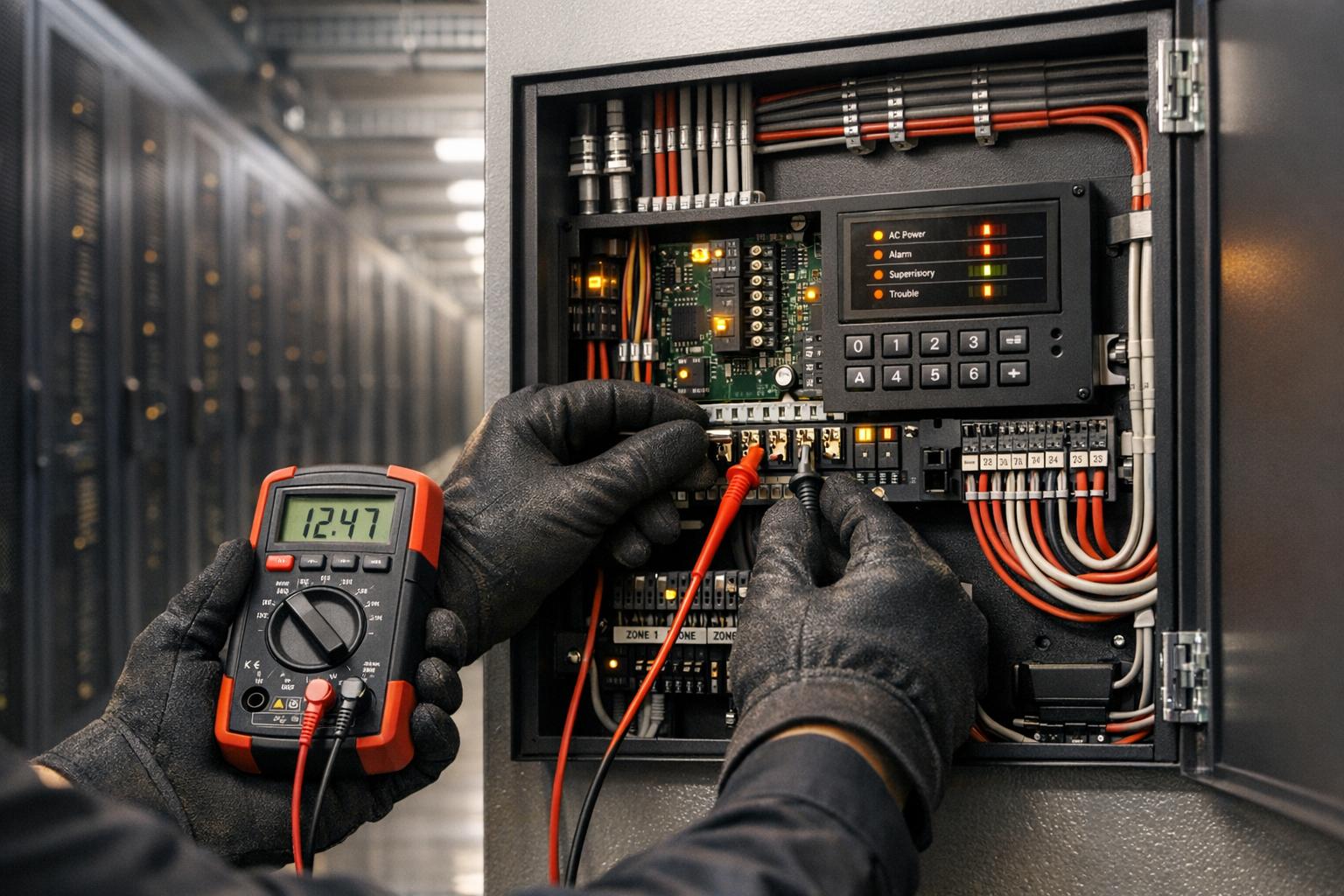
Fire alarm technicians certified by NICET often need more advanced training to excel in high-stakes industries like data centers and energy. Here's why:
Advanced certifications and training help technicians manage intricate systems, qualify for leadership roles, and meet industry demands.


NICET Fire Alarm Certifications: Levels, Fees & Career Paths
With a NICET FAS credential, you can pursue certifications that sharpen your skills and prepare you to handle complex, high-stakes systems. These advanced programs build on the foundational NICET training, equipping technicians for the evolving demands of critical construction projects. For those operating in mission-critical environments, these certifications enhance your ability to manage intricate systems with confidence.
The Inspection and Testing of Fire Alarm Systems (ITFAS) certification is tailored for professionals focused on periodic fire alarm system inspection and maintenance - not design or installation. This credential aligns with the industry's growing focus on specialization.
ITFAS addresses advanced systems like networked control units, smoke interfaces, air sampling, multi-zone voice evacuation systems, and ERCES (Emergency Responder Communication Enhancement Systems). To qualify for Level II, technicians need 18 months of experience, including 6 months working with these complex systems. Those who have advanced beyond Level I in the standard FAS certification may also receive testing credit toward ITFAS, offering a clear advantage for those already progressing in their careers.
Exam fees for ITFAS start at $230 for Level I and $315 for Level II. Beginning October 7, 2024, candidates will have on-screen access to NFPA Codes and Standards during testing, making preparation more practical and aligned with real-world scenarios.
Similarly, certifications for water-based systems provide specialized expertise for integrated safety solutions.
Technicians working with fire protection systems must understand the integration of detection and suppression systems. NICET offers two key certifications in this area: Water-Based Systems Layout (WBSL) and Inspection and Testing of Water-Based Systems (ITWBS).
Here’s a quick overview of the certifications:
| Certification | Focus | Starting Exam Fee |
|---|---|---|
| ITFAS | Periodic inspection/testing of fire alarm systems | $230 (Level I) |
| ITWBS | Inspection/testing of water-based suppression systems | $230 (Level I) |
| WBSL | Layout, hydraulics, and detailing of water-based systems | $230 (Level I) |
For technicians aiming for senior roles in mission-critical construction, advancing to Level III or IV is crucial. Level III allows you to work independently and train junior team members, while Level IV establishes you as the expert for the most demanding assignments. For instance, the WBSL Level IV certification is priced at $410.
Getting advanced certifications is just one part of the process. Quality training is equally important - not only to prepare for exams but also to keep your skills sharp over time. Luckily, there are several reputable programs designed specifically for fire alarm technicians working in demanding environments. These training opportunities build on your certifications, equipping you to handle the unique challenges of mission-critical settings.
Providers like Fire Smarts and FireTech offer NICET-approved continuing education credits to help you stay ahead. Fire Smarts, for instance, features an 8-hour "Introduction to Fire Alarm Systems" course that sets the stage for pursuing advanced credentials. FireTech takes it a step further, offering level-specific prep courses:
These courses focus on the NFPA standards you'll encounter during testing, including NFPA 70, 72, and 101.
"The NICET Fire Alarm Systems certification is a robust credential, based on inter-related elements of system design, installation, maintenance, and inspection." - Fire Tech Productions
Before signing up for any course, make sure it aligns with the specific code version tied to your certification goals, such as NFPA 72 2016 or IBC 2015. FireTech’s courses also provide 90-day access and immediate feedback, helping you identify and address knowledge gaps early.
For technicians aiming to deepen their technical expertise, additional specialized training options are available.
If you’re working in high-stakes environments like data centers, pharmaceutical facilities, or large industrial sites, general fire alarm training may not be enough. FireTech’s NICET Level III Advanced Course ($339.00) is tailored for these scenarios, focusing on advanced system layout, troubleshooting, and technical servicing - skills crucial for complex environments.
SecurityCEU.com, in collaboration with the National Training Program (NTP), offers more than 175 hours of online CEU courses. These cover topics like IP Networking, Access Control, and Video Surveillance, which are essential for facilities where fire systems integrate with broader IT networks.
The South Florida Institute of Technology provides targeted training in Emergency Communications Systems and Emergency Control Function Interfaces for $200.00. This program is ideal for technicians managing facilities with intricate notification and control needs. Additionally, the California Alarm Association (CAA) offers its members access to the Field Service Technician (FST) series, which progresses from foundational knowledge to advanced life safety training.
Industries like data centers, defense, energy, and advanced manufacturing are on the lookout for specialists who understand specific systems and codes. By diving into the jobs and workforce landscape in mission-critical construction, you can pinpoint where your skills align and identify areas with growing demand.
The difference between a general fire alarm technician and one who excels in mission-critical environments often comes down to specialization. For instance, data centers depend on aspirating smoke detection systems like VESDA (Very Early Smoke Detection Apparatus). Mastering these systems requires specialized training through providers such as Xtralis/Honeywell. Similarly, defense and large industrial sites increasingly use Mass Notification Systems (MNS), which demand expertise in managing signaling overrides and ensuring audio synchronization across vast facilities.
Beyond basic skills, factory programming knowledge can set candidates apart. Proprietary platforms like Honeywell's Gamewell-FCI E3 or S3 series require factory certification - offered through programs like E3/S3 University - just to handle essential tasks like upload/download and maintenance. Additionally, tools like Honeywell's Connected Life Safety Services (CLSS), which require an annual renewal of 2,040 tokens, are becoming standard for technicians tasked with overseeing system health across multiple locations.
Advanced NICET certifications provide another edge, qualifying professionals for leadership roles in managing intricate systems. As NICET explains:
"Achieving certification is a big step on the career ladder, hopefully it is only the beginning of the climb towards ever higher career goals and rewards." - NICET
Acquiring these specialized skills is only part of the equation - you also need to navigate a recruitment process that matches your expertise to the right opportunities.
Mission-critical positions often require verified credentials, state-specific licenses, and a proven track record of relevant projects. This is where working with a recruitment partner like iRecruit.co can be a game-changer. Founded by Dallas Bond and Tanya Runholt, iRecruit.co specializes in mission-critical construction, connecting professionals with roles in data centers, energy infrastructure, defense technology, and advanced manufacturing.
Their thorough screening process ensures that your qualifications align with roles suited to your expertise, whether you're aiming for a field lead position or a senior engineering technician role. For those looking to advance, this targeted approach can help bypass unnecessary hurdles and connect you directly to opportunities that fit your career goals.
Advanced training builds on NICET credentials to provide the expertise required for mission-critical roles. In the fire alarm industry, continuous learning is highly valued. NICET certifications, for example, need to be renewed every three years through Continuing Professional Development (CPD). Additionally, NFPA standards now clearly state that service personnel must be "qualified and experienced", making documented training a necessity for working on critical job sites.
This consistent focus on education helps transform entry-level technicians into future leaders. Beyond ensuring compliance, continuing education equips technicians with the in-depth knowledge employers look for. Specialized courses, like the National Fire Academy's Plans Review of Fire Alarm Systems, offer 3.5 CEUs and 2 semester hours of upper-division baccalaureate credit, preparing professionals for complex projects in industries like data centers, defense, and energy infrastructure. Advancing from Level I to Level IV is not just about earning a new credential - it’s about stepping into roles where you lead projects and mentor others.
The benefits of ongoing education extend to both financial and professional growth. The numbers speak for themselves. Exam fees ranging from $230 to $425 deliver returns that far exceed the initial costs. For example, ESA’s CFAT Level 2 bundle costs $730.80 for members, a worthwhile expense considering the career advancements it enables. As Casey Williams, Senior Product Enablement Manager at ADT Commercial, explains: "One of the biggest benefits of ESA's program is career progression. Getting the certifications needed to grow in the industry is a huge benefit."
iRecruit.co plays a key role in connecting certified professionals with mission-critical opportunities in sectors like data centers, defense, energy, and advanced manufacturing. Their pre-screening process ensures that your training and certifications are visible to the employers who need them most. By aligning advanced credentials with high-demand roles, continuing education not only ensures compliance but also opens doors to leadership and long-term career success.
After achieving NICET Level I in Fire Alarm Systems, moving on to NICET Level II is a natural next step. This certification builds on the basics, diving deeper into areas like system layout, installation, troubleshooting, and inspection. Earning Level II showcases a higher level of technical skill and is a key milestone for professionals aiming to take on more complex projects. It also boosts job opportunities and professional credibility, aligning well with long-term goals in the fire alarm industry.
Specialized training for high-stakes facilities, like data centers, focuses on critical safety systems. This includes courses on fire suppression systems and alarm system reviews. For instance, advanced training covers gas-based fire suppression activation and evacuation protocols, ensuring both safety and regulatory compliance. Additionally, courses on fire alarm system planning and review help technicians ensure installations align with safety codes, preparing them to handle the unique challenges of mission-critical environments.
To manage and track CPD points for NICET renewal, make use of your NICET online account. Over a three-year period, you're required to accumulate 90 CPD points, which are split into categories such as Active Practitioner, Additional Education, and Certification Activity. To validate your points, keep supporting documents like certificates from accredited training providers. Your online account allows you to log qualifying activities and assign the corresponding points needed for recertification.